Leave a Message

By providing your contact information to Alexandra Crum, your personal information will be processed in accordance with Alexandra Crum's Privacy Policy. By checking the box(es) below, you consent to receive communications regarding your real estate inquiries and related marketing and promotional updates in the manner selected by you. For SMS text messages, message frequency varies. Message and data rates may apply. You may opt out of receiving further communications from Alexandra Crum at any time. To opt out of receiving SMS text messages, reply STOP to unsubscribe.

Thank you for your message. We will be in touch with you shortly.

Olivenhain vs Rancho Santa Fe For Equestrian Buyers

February 12, 2026

You love your horses and you want a property that fits the way you ride and live. Choosing between Olivenhain and Rancho Santa Fe can feel like picking between two great options that offer very different rhythms. If you are weighing private trails, lot sizes, zoning rules, and the day-to-day costs of keeping horses at home, the right fit matters. This guide breaks down the essentials so you can decide with confidence. Let’s dive in.

Olivenhain and Rancho Santa Fe at a glance

Both communities sit in North County San Diego, but they operate under different rules and rhythms.

  • Olivenhain sits within the City of Encinitas in 92024. Zoning and permits run through the City of Encinitas. Many homes are served by the Olivenhain Municipal Water District. Some rural parcels may use wells or septic. Always verify by parcel.
  • Rancho Santa Fe is unincorporated. Community standards are influenced by San Diego County Planning and the Rancho Santa Fe Association through the Covenant and association rules. Water service in much of RSF comes from the Santa Fe Irrigation District. Some larger parcels may use wells or septic. Confirm by parcel.
  • Market position differs. RSF is known for high-end estates with historic equestrian roots and larger acreages. Olivenhain offers a more moderately priced entry into large-lot living relative to RSF, with a mix of hobby farms and 1 to 5 acre properties.

Trails and riding experience

Rancho Santa Fe: Private trail culture

RSF is known for private bridle paths, long-standing trail easements, and community-maintained routes tied to the historic Covenant. Many estates have internal trails and direct links to neighboring properties. If you enjoy long hacks, estate-to-estate rides, and training in on-site arenas, RSF often supports that lifestyle at scale.

Olivenhain: Mixed public and private access

Olivenhain’s riding scene blends multi-use municipal trails, rural roads, and connections into regional systems like the San Dieguito River Park corridor and nearby preserves. Topography is rolling with coastal influence. It is a strong match for trail riders and pleasure hacking, with many properties set up for private schooling arenas and shorter drives to coastal towns.

What to verify for any parcel

  • Trail easements and legal access vary by lot. Request recorded easements and official trail maps from the appropriate agencies or associations before you rely on a route.
  • Check for seasonal closures, sensitive habitat protections, and posted stock rules in preserves.
  • Confirm driveway access and trailer maneuvering if you plan to haul out to regional trailheads.

Lot sizes, zoning, and development patterns

Rancho Santa Fe: Estate-scale equestrian

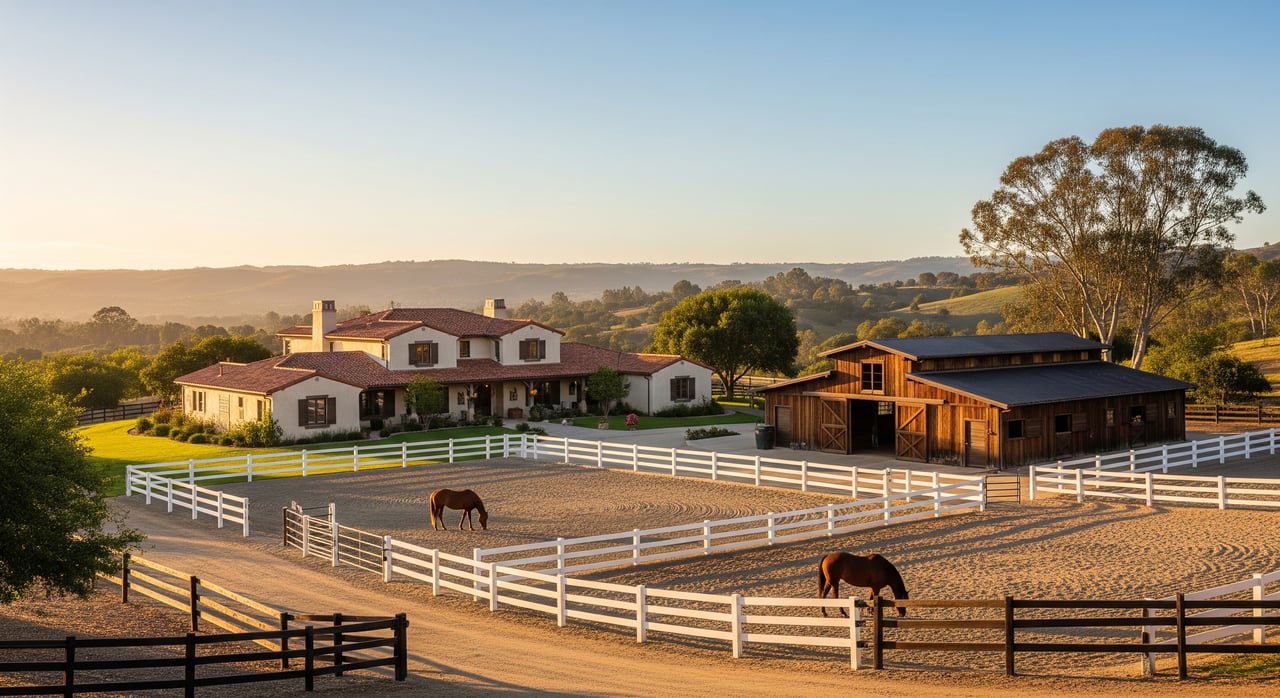
RSF commonly offers large parcels, frequently 2 to 10 or more acres, with many properties designed for full equestrian programs. Expect room for barns, arenas, paddocks, and turnout fields. Because RSF is unincorporated, both County zoning and the Rancho Santa Fe Association’s Covenant and design review can shape what you can build and how you can use it.

Olivenhain: Flexible mix of acreage

Olivenhain features a range of lots, from neighborhood pockets near 0.25 to 1 acre to rural residential parcels in the 1 to 5 acre range. You will find many equestrian-compatible properties, though there are fewer ultra-large estates compared to RSF. Permits for barns, arenas, and any commercial boarding run through the City of Encinitas.

Permits and property setup to confirm

  • Allowed number of animals and accessory structures under current zoning.
  • Setbacks, building envelopes, and design review for barns and arenas.
  • Water source and capacity for irrigation and stock, including any district restrictions.
  • Septic sizing and condition vs your planned use.
  • Soil and drainage suitability for arena footing and paddocks.

Boarding, services, and on-site facilities

Where horses live

  • Rancho Santa Fe has a high density of private on-site facilities and access to upscale commercial boarding in the greater North County corridor. Many owners stable at home.
  • Olivenhain offers both private and commercial boarding options, though they may be fewer or more modest than in RSF. Its location makes regional barns and trainers accessible.

Local support network

Across both communities, evaluate availability of farriers, equine veterinarians, chiropractors, massage therapists, and dentists. Trainer access, lesson programs, and show circuits vary by barn. In RSF you will often find more on-site high-performance settings, while Olivenhain tends to lean pleasure riding and schooling unless you are near a dedicated show facility.

Arena and improvement wish list

Common features to look for include outdoor or covered arenas, quality footing and drainage, lighting, turnout acreage per horse, wash racks, tack rooms, hay storage, manure management areas, and trailer parking. Confirm permits and compliance for all existing structures.

Everyday logistics and risk factors

Water, septic, and utilities

Confirm if the property is on municipal water or a private well, and whether sewer is available. Well yield and water quality testing are essential if you plan to keep multiple horses. In drought years, water and hay costs can rise, so evaluate irrigation capacity, pasture feasibility, and any local water district restrictions in advance.

Fire risk and defensible space

Both communities face wildfire risk. Check official Fire Hazard Severity Zone designations and follow local defensible space and brush management rules. Structure setbacks, clearance requirements, and grazing or vegetation guidelines can affect how you design paddocks and barns.

Insurance, liability, and neighbor rules

Insurance varies for private ownership, commercial boarding, and lessons. Some parcels or associations limit commercial activity, events, or the number of animals. Review City of Encinitas codes for Olivenhain and the RSF Covenant and County rules for Rancho Santa Fe before committing to a business plan.

Manure and waste management

Large properties need a clear system for manure storage, composting, and hauling that complies with local runoff and stormwater rules. Placement, containment, and contractor access matter for both day-to-day function and compliance.

Commuting and daily drives

Olivenhain places you closer to Encinitas, the I-5 corridor, and coastal amenities. Rancho Santa Fe is set inland with proximity to North County office corridors. Drive times vary with traffic, so test your commute during peak hours.

Which community fits your riding style?

  • Choose Rancho Santa Fe if you want estate-scale living with private bridle networks, room for a comprehensive on-site program, and a deep equestrian culture across neighboring properties.
  • Choose Olivenhain if you want coastal-adjacent acreage, flexible trail access across municipal and regional systems, and a mix of hobby-friendly setups with shorter drives to beaches and town.
  • If you need to board part-time or bring in specialty clinicians, both locations can work. Your final choice may hinge on specific parcel features, commute time, and water or permit constraints.

Due-diligence checklist for equestrian buyers

Use this list to pressure-test any property before you offer:

  • Legal and title
    • Confirm zoning, permitted uses, and the allowed number of animals.
    • Review RSF Covenant and any association rules, CC&Rs, and design review criteria.
    • Identify recorded trail and bridle easements and any open-space or agricultural easements.
  • Property systems and site conditions
    • Verify water source, well yield reports, water quality tests, and district restrictions.
    • Confirm septic sizing, condition, and upgrade needs vs your planned horse count and barn features.
    • Assess soil type, drainage, and arena footing suitability; check for erosion risks.
    • Inspect fencing, cross-fencing, gates, and livestock setback compliance.
    • Verify permits and code compliance for barns, arenas, lighting, and outbuildings.
    • Evaluate trailer access: driveway width, turning radius, parking, and loading areas.
  • Operations and vendors
    • Map out proximity and availability of boarding barns, vets, farriers, trainers, feed and hay delivery.
    • Ask about seasonal hay pricing and delivery logistics.
    • Confirm local manure storage and hauling requirements.
  • Financial and insurance
    • Review the property tax basis, any assessments, and potential agricultural exemptions.
    • Obtain insurance quotes for equine liability and farm or ranch coverage as needed.
    • Estimate ongoing costs: water, feed, footing maintenance, fencing repairs, and staffing.

Ready to tour properties that fit your horses and your life?

You deserve a property that matches how you ride, work, and relax. If you want a clear, side-by-side view of specific parcels in Olivenhain and Rancho Santa Fe, along with permit, water, and trail easement checks, let’s build your shortlist and walk it together. Reach out to Alexandra Crum to schedule a consultation.

FAQs

What makes Rancho Santa Fe stand out for equestrians?

  • RSF offers larger estate parcels, private bridle networks, and a long-established equestrian culture that supports on-site arenas, turnout, and extended hacking.

How does trail access typically work in Olivenhain?

  • Olivenhain blends municipal multi-use trails, rural roads, and regional connections, with access and easements varying by parcel, so verify recorded routes for each property.

What should I confirm about water and septic before buying?

  • Identify the water source, review well yield and quality if applicable, check district restrictions, and match septic size and condition to your planned number of horses and barn features.

Are there limits on horses per acre in these areas?

  • Yes, limits can apply and differ by jurisdiction; review City of Encinitas rules for Olivenhain and County plus RSF Covenant standards for Rancho Santa Fe before finalizing plans.

How does wildfire risk affect equestrian properties in North County?

  • Both areas have wildfire exposure, so confirm Fire Hazard Severity Zone status and follow defensible space, clearance, and building setback rules when siting barns and paddocks.

What features should I prioritize in an arena and barn setup?

  • Look for permitted structures with quality footing and drainage, safe fencing, adequate turnout, lighting, wash racks, tack and hay storage, manure management, and easy trailer access.
Alexandra Crum

About the Author

Alexandra Crum

A trusted real estate agent in Rancho Santa Fe, CA, known for her market expertise and personalized client service. With a background in managing family properties and a passion for real estate, she brings valuable local insight. An equestrian enthusiast, she loves Rancho Santa Fe’s charm and strong community. Outside of real estate, she enjoys design, fitness, and supporting her children's activities.

Partner With Alexandra

My mission is to provide you with exceptional service and results that exceed your expectations.