You do not need acres to create a coastal oasis in Solana Beach. With the right plan, a compact yard or patio can feel layered, private, and camera-ready at sunset. If you want a space that works for everyday living and shines in listing photos or lifestyle videos, you can build it with a smart approach to wind, sun, materials, and screens. This guide walks you through a proven process tailored to Solana Beach conditions so you can get big impact on a small lot. Let’s dive in.
Why small lots can shine
Solana Beach lots are often tight and close to neighbors, but that can work in your favor. Short distances make it easier to zone spaces, control wind, and layer privacy without losing light or view corridors. With a Mediterranean coastal climate, you enjoy mild temperatures year-round and many comfortable evenings outside.
You also have unique constraints to respect. Expect a marine layer in the morning most days, regular onshore breezes from the west, and occasional Santa Ana winds in fall and winter that are hot and dry. Salt-laden air near the shore accelerates wear on metals and finishes. Planning for these details from day one pays off in comfort and longevity.
Map sun, wind, and views first
Before you buy furniture or pour concrete, map what the site gives you. A quick study can prevent costly rework and sets up better photos later.
Track the sun
- Note sun angles and shadows at sunrise, solar noon, mid-afternoon, and sunset.
- Repeat in different seasons or use a sun-path app to predict winter and summer changes.
- Aim to let low winter light reach your main seating while providing summer shade from the west.
Read the wind
- Expect daytime sea breezes from the west or northwest. Mark where you feel gusts and where the house creates eddies.
- Plan for rare Santa Ana events from the east with retractable or stowable shade and umbrellas.
- Test with lightweight flags to see how wind moves around neighboring structures.
Locate noise and quiet windows
- Note when nearby roadways or trains are loud. Shoots often go best mid-morning or after the evening peak.
- A small, low-volume water feature can help mask background noise without overpowering conversation.
Protect views and privacy
- Identify ocean and sunset sightlines you want to keep open.
- Map neighbor windows and paths that need screening.
- Prioritize view corridors while creating targeted privacy zones.
Layer outdoor rooms for depth
Use sequence and scale to make a small space feel generous while protecting views and comfort.
A compact layout that works
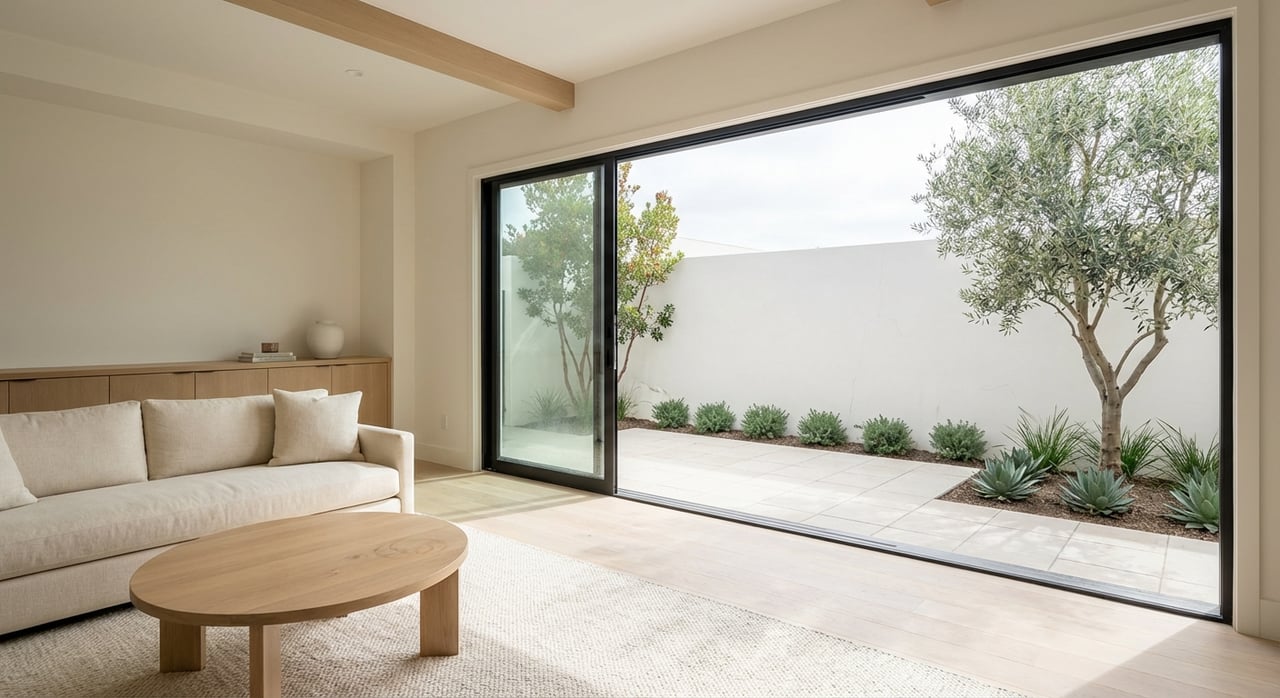
- Threshold: a shallow step or planted border to signal the transition from indoors to out.
- Main zone: a dining or lounge area sized for 4 to 6 people, close to the kitchen doors for easy use.
- Buffer: a trellis, slatted screen, or tall planters to block sightlines and soften wind without building a solid wall.
- Edge path: a narrow promenade and low planting that maintains circulation and gives you clean camera angles.
Flexibility you can adjust
- Use movable planters, folding panels, or retractable shades to switch between full privacy and open views.
- Keep screening reversible to protect resale value, especially if you enjoy ocean views.
Wind and sun moves that matter
- Choose porous windbreaks with about 30 to 60 percent openness. Solid walls tend to create turbulence.
- Place west-facing shade high enough to block hot summer sun while allowing winter sun to warm the space.
- Add thermal mass near the house. Stone or concrete can hold warmth into twilight for comfort and better photos.
Acoustic comfort in a tight setting
- Combine a fence, dense planting, and a quiet water feature on the noisy side.
- Avoid high-volume features that compete with conversation or recording.
Choose coastal-durable materials
Salt, UV, and wind work hard on coastal finishes. Pick materials and hardware that last and keep maintenance reasonable.
Metals and fasteners that last
- Use marine-grade 316 stainless fasteners and fittings in exposed locations.
- Favor powder-coated aluminum or 316 stainless for structures. Avoid bare steel near the shore.
- For glass windbreaks or rails, select tempered or laminated panels with low-reflectance options to reduce glare on camera.
Wood, composites, and hardscape
- Ipe or garapa are tough hardwoods that weather well. Oil them if you want to keep the original color.
- Cedar and redwood can work with frequent sealing, especially close to the ocean.
- Capped composite or PVC decking offers low maintenance and is great where access is tight.
- Use permeable pavers or jointed paving to handle runoff. Keep surfaces sloped away from the house and choose slip-resistant finishes.
Fabrics, shade, and fixtures
- Select solution-dyed outdoor fabrics that resist UV, mildew, and salt. Store cushions when not in use.
- Choose wind-rated umbrellas or retractable awnings with engineered anchors. Use systems that can fold flat when winds pick up.
- Install outdoor-rated fixtures with marine-grade housings and high CRI LEDs for accurate color on camera.
Maintenance rhythm that fits coastal life
- Rinse salt from metals and fabrics monthly to quarterly.
- Inspect fasteners, wood finishes, and sealants annually.
- Re-oil wood and re-seal stone every 1 to 3 years, based on exposure.
- Design for easy fixes with replaceable rails or removable panels where access is tight.
Planting and screens that perform
Blend fixed screens with living layers so you get privacy, wind control, and visual softness without losing light.
Smart screening combinations
- Pair slatted wood or perforated metal with vines or hedges to soften edges.
- Keep porosity in the 30 to 60 percent range to reduce turbulence while taking the edge off wind.
- Use wheeled planters or retractable fabric screens to open or close views as needed.
Coastal plant picks that can handle it
- Hedges and shrubs: pittosporum, rosemary, and escallonia are resilient and can form dense screens.
- Vines: bougainvillea loves salt and sun. In protected spots, try mandevilla or hardy jasmine.
- Grasses: pennisetum and lomandra add texture and help diffuse sound.
- Trees: use small, columnar forms sparingly to avoid blocking views and to manage roots on a small lot.
Planters, soil, and irrigation
- Use lightweight engineered planters for decks and roof areas. Provide drainage, root barriers, and overflows.
- Fill with a well-draining mix and slow-release fertilizers suited to coastal plants.
- Install efficient drip or microspray with a smart controller to match weather and soil moisture.
Fire-wise touches
- Choose low-fuel plants near structures and break up planting with hardscape bands.
- Follow local guidance for ember-resistant landscaping and clearance around eaves.
Make twilight your secret weapon
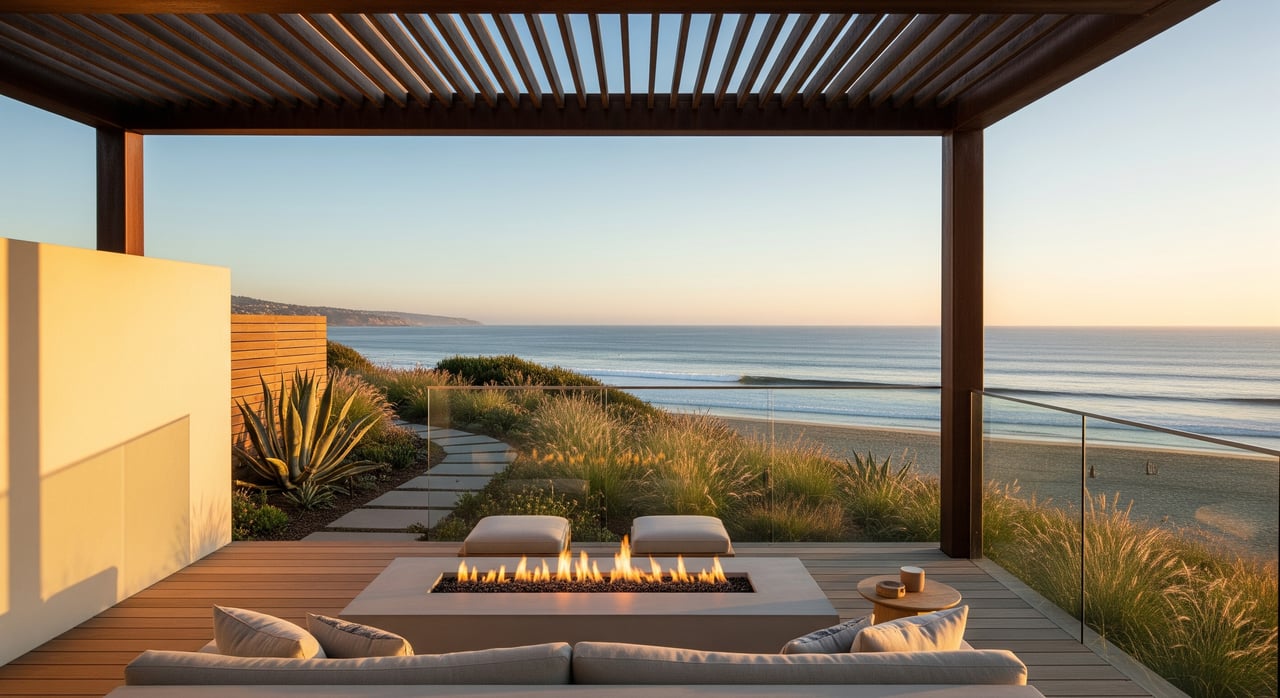
Design your space to look its best during golden hour and blue hour, when listing photos and lifestyle clips feel cinematic.
Time shoots for coastal light
- Golden hour shortly after sunrise and before sunset is warm and flattering.
- On marine layer mornings, plan for mid-afternoon through evening as skies clear.
Lighting that photographs well
- Layer path and planter uplights, mid-level sconces or string lights, and targeted task lighting.
- Use warm color temperatures between 2700K and 3000K and high CRI LEDs for true-to-life skin tones and finishes.
- Put lights on dimmers and zones so you can dial in the mood for photos and daily life.
Surfaces and colors that read right
- Favor matte or lightly textured finishes to avoid hot reflections.
- Warm-toned textiles and woods add richness at dusk. Neutral mid-tones are easy for cameras to expose.
Better sound for lifestyle video
- Expect wind. Use directional mics with windscreens and place them near seating.
- Keep water features low and consistent so they mask noise without overwhelming dialogue.
- Hide utilities and clutter behind planters or integrated screening to keep frames clean.
Permits, pros, and smart budgeting
Avoid surprises by checking rules and lining up the right help early.
Permits and who to call
- Check with the City of Solana Beach for setbacks, fence and wall heights, decks, and pergolas.
- Properties in the Coastal Zone may require additional review. Look into local coastal programs before you build.
- Hire a landscape architect or licensed contractor for engineered shade structures and a licensed electrician for outdoor circuits.
Budget drivers and tradeoffs
- Big cost items include pergolas, decks, hardscape, large planters, mature plant material, and quality lighting.
- Decide where you want longevity. Marine-grade stainless, hardwoods, and powder-coated aluminum cost more upfront but reduce maintenance.
- Movable planters and partial screens are budget-friendly and can protect view value compared to full-height fixed walls.
Resale and view corridors
- Avoid blocking primary ocean views. Use partial, porous, or reversible screening to balance privacy and value.
- Design sightlines with buyers and photographers in mind so the space feels open in person and on camera.
Next steps for your Solana Beach home
A small lot on the coast can live large when you map sun and wind, layer rooms, and choose materials that stand up to salt and UV. If you want a plan that feels good daily and photographs beautifully at dusk, start with site mapping, then build out flexible layers and durable finishes.
Ready to plan your small-lot outdoor room in Solana Beach? Connect with Unknown Company to schedule a consultation or get your home valuation.
FAQs
What materials resist salt air on Solana Beach lots?
- Use 316 stainless fasteners and fittings, powder-coated aluminum or 316 stainless for structures, capped composites or dense sealed stone for surfaces, and marine-rated outdoor fixtures.
How can I block wind without losing ocean views?
- Install porous windbreaks with about 30 to 60 percent openness and place them to protect seating while keeping key view corridors open. Avoid solid walls that create turbulence.
Do I need permits for pergolas or decks in Solana Beach?
- Often yes. Check with the City of Solana Beach for height and size rules, and confirm if a Coastal Development Permit is required within the Coastal Zone.
Which plants handle salt, wind, and low water near the coast?
- Try pittosporum, rosemary, escallonia, bougainvillea on trellises, and grasses like pennisetum and lomandra. Use efficient drip or microspray irrigation with a smart controller.
How do I make the space look great at twilight for photos?
- Plan golden-hour shoots, layer warm 2700K to 3000K lighting with high CRI LEDs, avoid harsh overhead downlights, and favor matte finishes that reduce glare on camera.